Oil leaking from a hydraulic pump or motor almost always traces back to one of two sources: a failed static seal (a gasket between housing components) or a failed oil seal at the rotating shaft. Identifying which one is leaking and why determines whether a seal kit is enough or whether the whole pump or motor needs replacing.
This guide covers the most frequent causes of leakage in gear pumps and motors, how to tell them apart, and what to check before ordering a replacement part.
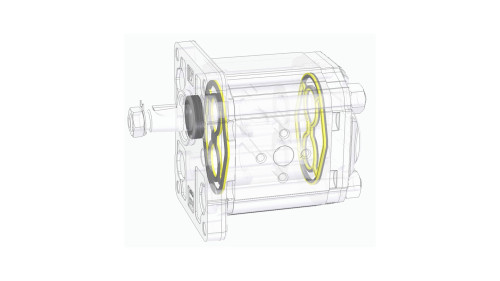
Leaks generally fall into two categories: a static seal failure, where the gasket sealing two housing sections (body, flange, cover) has extruded or ruptured; or an oil seal failure, where the rotary seal around the drive shaft has worn out or blown. The two require different fixes, so the first step is always to locate exactly where the oil is coming from.
Static seals fail when the joint they seal is subjected to pressure spikes beyond what the gasket can handle, causing it to extrude out of its seat, or when one of the mating components — body, flange, or cover — is itself damaged or out of tolerance. Once a static seal has extruded or torn, it cannot be reused; it has to be replaced with the correct gasket for that pump or motor group.
Oil seal failures depend on how the component is installed and operated:
In all three cases, the seal itself is rarely the root cause — it's a symptom of a pressure or installation issue upstream.
If the leak comes from a static seal, replace the damaged gasket with the correct one for that pump or motor group, a broken static seal cannot be repaired or reused. If the leak comes from a worn or blown oil seal, and the shaft, bearings, and housing are otherwise undamaged, a seal replacement is usually sufficient. But if the failure has damaged the body, shaft, or bearings themselves, the pump or motor needs to be replaced outright rather than just resealed.
Before fitting a replacement seal, it's worth confirming why the original one failed. Refitting a new seal without correcting the underlying cause, wrong rotation direction, excessive back-pressure, a restricted drain usually just means a repeat failure a few months later.
Beyond incorrect pressure or installation, three other conditions commonly shorten seal life:
Incorrect installation at the source. If the sealing system wasn't fitted correctly during assembly or a prior repair, the seal is under abnormal stress from day one and tends to fail early.
Operating temperature above the seal's rated limit. Sustained heat beyond what the seal material can tolerate dries it out, hardens it, and eventually burns it — well before its expected service life.
Chemical incompatibility between the oil and the seal material. Not every seal compound is compatible with every hydraulic fluid. Using an oil that attacks the seal material causes it to swell, soften, or degrade over time, even under otherwise normal operating conditions.
Chemical compatibility between the hydraulic fluid in use and the seal material should be checked before commissioning a pump or motor, and again any time you switch fluid type or supplier.
Can a leaking hydraulic pump seal be repaired, or does it need to be replaced? A broken static or oil seal cannot be repaired once damaged — it must be replaced with a correctly matched seal or seal kit for that specific pump or motor group.
Is it normal for a hydraulic pump to leak a small amount of oil? No. Gear pumps and motors are sealed components; any visible oil leak indicates a seal or gasket has failed and should be diagnosed rather than left unaddressed, since continued operation can damage the shaft or bearings.
Does the direction of rotation matter for oil seal life? Yes, on unidirectional pumps and motors. Running the component in the opposite direction to how it was built puts abnormal load on the shaft seal and is a common cause of early failure.
How do I know if I need a seal kit or a full pump/motor replacement? If only the static or oil seal has failed and the housing, shaft, and bearings are undamaged, a seal replacement is usually enough. If the body or internal components have also failed, the pump or motor needs to be replaced.
Can high temperature alone cause an oil leak? Yes. Operating above the seal material's rated temperature dries out and hardens the seal over time, leading to leakage even without a pressure spike or installation fault.
Where can I check if my hydraulic oil is compatible with my seal material? Contact our technical team.
Vicolo del lavoro, 9 40069 Zola Predosa (BO) Italy
Phone : +39 051 755082 - Email : .(JavaScript must be enabled to view this email address)
C.F e P.IVA : IT 02423401203 - R.E.A. 438331
Уставной капитал: €10.000,00 i.v.
Credits: Lincolnpixel Web Agency
© 2026 Hydrapac Italia, Inc. All rights reserved.